)










The fastest machine on a specification sheet is not automatically the most suitable machine for every SMT production line. Choosing an SMT pick-and-place machine requires a clear understanding of production output, product mix, component range, PCB requirements, material setup, factory space, existing line conditions and future capacity needs.
The goal is not to select the machine with the highest published performance figure. The goal is to define the characteristics required by the factory and then evaluate equipment that matches those production requirements.
A practical selection framework is:
Production Volume + Product Mix + Component Range + PCB Requirements + Material Setup + Factory Space + Existing Line + Future Capacity = Suitable SMT Placement-Machine Profile.
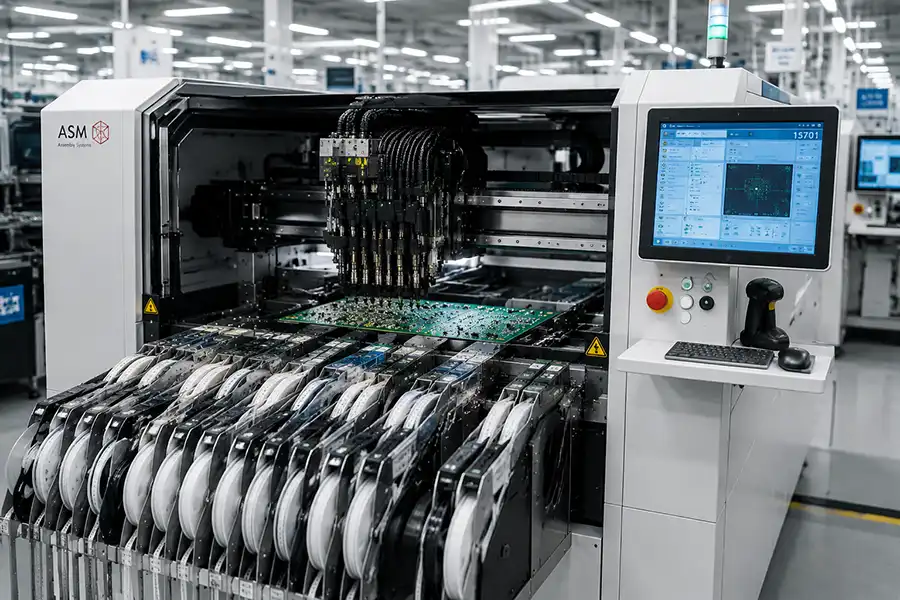
Start With Your Production Requirements
Before comparing SMT placement machines, define what the production line actually needs to achieve.
The initial requirement profile should include:
Products being assembled
Expected production volume
Components placed on each PCB
Product change frequency
Component package range
PCB dimensions and handling requirements
Material presentation formats
Existing SMT line configuration
Available factory space
Future production plans
These requirements provide the foundation for equipment evaluation. Without a clear production profile, machine comparisons often depend too heavily on labels such as high-speed, flexible or modular without explaining what those characteristics mean for the actual manufacturing task.
Evaluate Required Output, Not Only Rated Placement Speed
Rated placement speed is an important machine characteristic, but it does not independently determine real production output.
Before evaluating machine capacity, consider:
Required boards per hour
Required boards per shift
Components placed per board
Available production hours
Peak production demand
Required capacity reserve
Output limitations of upstream and downstream equipment
Actual throughput may also be influenced by:
Component mix
PCB complexity
Placement sequence
Feeder and material setup
Component replenishment
Product changeovers
Machine configuration
Production interruptions
A machine with a high rated placement figure may not achieve the expected board output if the product requires frequent material changes, unusual components or production conditions that limit continuous operation.
Machine capacity should therefore be evaluated as part of the complete SMT line, including printing, placement, reflow, inspection and material-handling processes.
Match the Machine to High-Volume or High-Mix Production
Production requirements influence which machine characteristics deserve the most attention. High-volume and high-mix environments are not always strict opposites, and many factories require a balance between output and flexibility.
High-Volume and Repetitive Production
High-volume production often involves repeated products, longer manufacturing runs and stable production schedules.
Relevant characteristics may include:
Placement throughput
Stable continuous operation
Output per unit of floor space
Material supply continuity
Capacity alignment with upstream and downstream equipment
Reduced production interruptions
Consistent process control
A high-volume factory should not select equipment based only on maximum rated speed. Material continuity, component range and line balance also affect practical production performance.
For manufacturers prioritizing high placement performance within limited production space, the SIPLACE TX Series is one ASM/SIPLACE platform that may be evaluated. The exact machine, head, conveyor, feeder and board-handling configuration should still be matched to the required production profile.
High-Mix and Frequently Changing Production
High-mix manufacturing may involve many PCB products, shorter production runs, frequent program changes and changing material requirements.
Relevant characteristics may include:
Broad component support
Adaptable machine configuration
Flexible feeder and tray arrangements
Efficient setup management
Reduced changeover time
Program and material management
Flexibility does not automatically mean lower production capability. The appropriate balance depends on product variety, component requirements and how production capacity is organized.
For high-mix environments or production lines that require adjustable placement capacity, the SIPLACE SX Series provides a relevant ASM/SIPLACE product direction to evaluate. Its Capacity on Demand concept allows production capacity to be adjusted by adding, removing or transferring placement gantries between suitable lines.
Confirm the Required Component Range
A suitable SMT placement machine must be evaluated against the complete component range used in current and planned products.
Important evaluation points include:
Smallest component package
Largest component dimensions
Component height
Component weight
Fine-pitch devices
Large integrated circuits
Connectors
Odd-shaped components
Large or heavy components
Required supply formats
Component capability is determined by the complete equipment configuration rather than one individual component or subsystem.
Relevant factors may include:
Placement-head configuration
Pickup tools
Vision system
Material-supply system
Machine software
Installed options
Component capability should be verified for the exact machine configuration being evaluated. A capability associated with one configuration should not automatically be applied to every machine in the same product family.
Check PCB and Board-Handling Requirements
Component capability alone does not determine whether a machine is suitable. PCB format and board-handling requirements must also match the production environment.
Confirm:
Minimum PCB dimensions
Maximum PCB dimensions
PCB thickness
PCB weight
Panelized-board requirements
Large or unusual board formats
Board-support requirements
Single-lane or dual-lane operation
Conveyor direction
Existing line height
Upstream and downstream interfaces
Confirm the actual board-handling configuration rather than applying one setup limit to every machine in the same product family.
Dual-lane operation may benefit some production environments, but the decision should depend on PCB requirements, line balance and connected equipment.
Evaluate Material Setup and Feeder Capacity
Component variety and material presentation affect how efficiently a machine can remain prepared for production.
Material setup may influence:
Number of component types available in one setup
Frequency of material changes
Operator workload
Material replenishment requirements
Line balance
High-mix production efficiency
Machine-side space usage
Components may be supplied through tape feeders, trays, tubes, sticks or other supported systems.
The important evaluation point is not only how much material a machine can hold, but how the material setup supports the actual production workflow.
Consider Factory Space and Line Layout
Machine selection should include the complete installation environment, not only the published equipment footprint.
Review:
Machine footprint
Material-loading area
Tray-unit space
Operator access
Maintenance access
Conveyor layout
Upstream and downstream equipment
Material movement
Production flow
Output per unit of factory space
A compact machine does not automatically mean lower production capability. Space efficiency and production performance describe different evaluation factors.
Similarly, a machine with strong placement capability may not be practical if operators cannot efficiently manage materials or access the equipment within the factory layout.
Plan for Capacity Changes and Scalability
Production requirements may change after equipment installation. New products, additional demand or line restructuring can create different machine requirements.
Relevant evaluation points may include:
Ability to add placement capacity
Line rebalancing options
Configurable placement heads
Feeder capacity
Conveyor or lane configuration
Future component requirements
Capacity transfer between production lines
Scalability should be understood as a configuration and capacity concept rather than a simple machine category.
Compare Production Requirements With Machine Characteristics
| Production Requirement | Machine Characteristics to Evaluate |
|---|---|
| High-volume repetitive production | Throughput, line balance, material continuity and output per floor area |
| High-mix production | Component range, setup flexibility, material capacity and changeover support |
| Large or unusual components | Suitable placement-head configuration, pickup tools, vision, supply systems and board handling |
| Limited factory space | Machine footprint, operator access and output per floor area |
| Changing production demand | Configurable capacity and future production flexibility |
| Existing SIPLACE production line | Software, feeder families, tooling and conveyor compatibility |
| Used machine evaluation | Exact configuration, condition, documentation and available support |
Verify Compatibility With an Existing SIPLACE Line
Compatibility is especially important when expanding an installed production line or evaluating used ASM/SIPLACE equipment.
Check:
Existing machine generation
Exact machine configuration
Software environment
Production-program compatibility
Feeder families and other material-supply systems
Placement-head configuration
Nozzle and tooling availability
Conveyor interface
Factory utilities
Internal technician knowledge
Technical support availability
Spare-parts availability
Two machines should not be considered compatible only because they use the SIPLACE name.
Compatibility should be evaluated at the level of:
Machine + Generation + Configuration + Software + Feeder System + Tooling + Conveyor Interface
Additional Checks for Used SMT Machines
Used equipment requires additional evaluation because practical value depends on both machine capability and current condition.
Confirm:
Exact model and generation
Installed head configuration
Conveyor configuration
Operating condition
Maintenance history
Included feeders and accessories
Software status
Available documentation
Parts and service support
A model name alone is not enough to determine whether a used machine fits the intended production environment.
Evaluate ASM/SIPLACE Machines Against Your Requirement Profile
Once the production profile is complete, use it to evaluate available ASM/SIPLACE placement machines rather than selecting equipment by series name or rated speed alone.
For each candidate machine, verify:
Whether the configured placement capacity supports the required output
Whether the installed heads, pickup tools and vision system support the required component range
Whether the board-handling configuration supports the required PCB formats
Whether the feeder and material setup supports the product mix and changeover plan
Whether the machine can integrate with the existing software, tooling, conveyor and factory utilities
Whether the equipment condition, documentation and support meet the project requirements
Explore available ASM/SIPLACE placement machines, or provide your PCB, component, production and existing-line requirements when evaluating a specific configuration.
Prepare Information Before Requesting a Machine Recommendation
A complete requirement profile helps equipment suppliers and engineers evaluate suitable machine directions more accurately.
PCB dimensions
PCB thickness and weight
Component package range
Largest or unusual components
Components per PCB
Required boards per hour or shift
Product mix
Changeover frequency
Material supply formats
Available factory space
Existing SMT equipment
Current SIPLACE generation
Existing feeder systems
New or used machine preference
Target installation schedule
Frequently Asked Questions About Choosing an SMT Pick-and-Place Machine
What should be considered when choosing an SMT pick-and-place machine?
Important factors include production volume, product mix, component range, PCB requirements, material setup, factory space, future capacity and compatibility with existing equipment.
Is rated placement speed the most important machine specification?
No. Rated speed is one evaluation factor, but actual production output is also affected by component mix, PCB complexity, material setup, changeovers, machine configuration and line balance.
What is the difference between high-volume and high-mix SMT production requirements?
High-volume production may prioritize output continuity and line balance, while high-mix production may require broader component support, setup flexibility and efficient changeover management.
Why does component range affect SMT machine selection?
Component capability depends on the complete machine configuration, including placement-head setup, pickup tools, vision, material supply and installed options.
What should be checked before adding a machine to an existing SIPLACE line?
Check the machine generation, configuration, software environment, feeder families, tooling, conveyor interface, factory utilities and available technical support.
Conclusion: Choosing an SMT pick-and-place machine should begin with a clear understanding of production requirements rather than a machine label or rated-speed figure. By evaluating output, product mix, component range, PCB handling, material setup, factory space, future capacity and existing-line compatibility, manufacturers can create a practical machine requirement profile before selecting suitable ASM/SIPLACE equipment.