

Existing Line Expansion
Add high-speed capacity to a line that already uses compatible SIPLACE programs, feeder tables, feeders and maintenance procedures.
Explore used and refurbished SIPLACE HS Series placement machines, including HS50 and HS60 high-speed chip-placement systems. Review available equipment, four-gantry head configurations, feeder tables, conveyor options, machine condition and legacy spare-parts support.
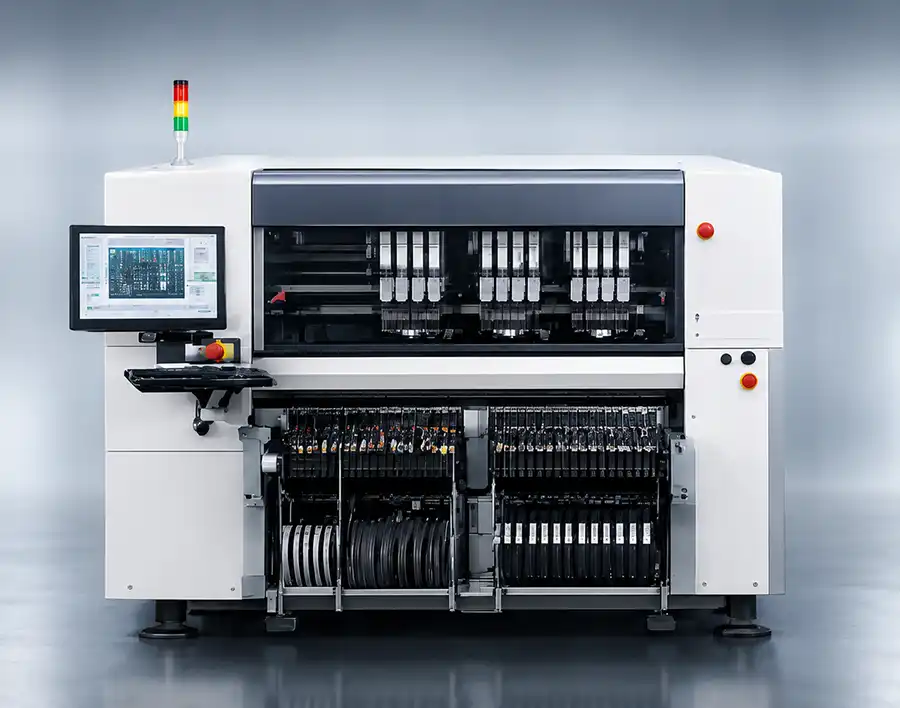
Browse the HS Series machines uploaded under this category. The exact head modules, cameras, conveyor mode, feeder tables, software version, machine condition and included accessories should be confirmed for each unit.
Both machines are commonly found as four-gantry high-speed systems with 12-nozzle Collect & Place heads. HS50 is generally associated with the 50,000-cph class, while HS60 represents the later 60,000-cph high-speed configuration. Actual output depends on component mix, feeder setup, maintenance condition and production program.
Common market specification for four-head HS50 systems; actual production rate is application dependent.
Super high-speed HS Series configuration for small and medium-size SMD placement.
Four independent high-speed placement positions on commonly supplied HS50 and HS60 machines.
Commonly configured with four 12-nozzle revolver-style Collect & Place heads.
The HS Series was developed as a dedicated high-speed placement platform for volume SMT production. Today, its strongest value is in factories that already operate compatible SIPLACE lines, feeders, programs and maintenance infrastructure.
HS50 and HS60 machines are normally selected for fast placement of chips and other components within the supported vision and head range. They are not intended to replace a flexible end-of-line machine for every large or unusual component.
Machines of the same model can differ in head generation, component cameras, PCB vision, feeder tables, conveyor arrangement, transport direction, station software and maintenance history. The actual installed equipment should therefore be checked before a quotation is accepted.
The table presents the general market positioning of the two principal HS Series models. Machine-specific inspection remains necessary because head, camera, conveyor and software configurations vary.
| Machine Model | Typical Architecture | Nominal Speed Class | Typical Component Role | Important Verification | Supply Status |
|---|---|---|---|---|---|
| SIPLACE HS50 | Four gantries with commonly four 12-nozzle heads | Approximately 50,000 cph class | High-speed chip and standard SMD placement | Head generation, cameras, software, transport and feeder tables | Contact for current stock |
| SIPLACE HS60 | Four-gantry super high-speed platform | Approximately 60,000 cph class | Small and medium-size SMD placement in volume production | All four heads, vision modules, conveyor, software and condition records | Contact for current stock |
The best fit is normally an established Siemens SIPLACE production environment that needs compatible high-speed capacity, a replacement machine or continued support for an existing HS50/HS60 line.
Add high-speed capacity to a line that already uses compatible SIPLACE programs, feeder tables, feeders and maintenance procedures.
Replace an unavailable or damaged HS50/HS60 while reducing changes to production data, operator training and line hardware.
Support production programs dominated by chips and compatible SMD packages within the installed vision and head capability.
Use a mature, understood platform where the application does not require the capabilities of a new-generation placement machine.
Parts should be matched using the machine model, original part number, head generation, installed location, connector details and clear photos. HS50 and HS60 share some component families, but not every part is interchangeable.
Used HS equipment should be reviewed by complete installed configuration, test scope and current machine condition before the order is finalized.
Confirm HS50 or HS60, target output, PCB range, component mix, feeder quantity and preferred machine condition.
Review all four heads, cameras, conveyor, feeder tables, transport direction, software and included options.
Check labels, photos, testing information, maintenance history, missing parts and the exact quotation scope.
Confirm machine securing, export packing, feeder packages, shipment data and destination requirements.
Common questions about HS50 and HS60 differences, machine configuration, used-equipment supply, feeder compatibility and legacy spare parts.
The two principal models are Siemens SIPLACE HS50 and SIPLACE HS60. Both are legacy high-speed placement systems, but their model generation, nominal capacity and installed hardware differ.
HS50 is generally associated with the 50,000-cph class, while HS60 is the later 60,000-cph super high-speed model. Both are commonly four-gantry machines, but the exact heads, cameras, software and mechanical parts must be verified.
Many market configurations use four 12-nozzle Collect & Place heads across four gantries. The actual head type and generation should be checked from machine photos, labels and configuration records.
Used or refurbished HS50 and HS60 machines may be available according to inventory. Machine condition, testing scope, configuration and included feeders or tables must be confirmed individually.
Historical Siemens documentation positions HS60 as a super high-speed system for components from 0201 through approximately 18.7 × 18.7 mm. Actual capability depends on the installed heads, cameras, nozzles and software.
Feeder packages are quotation dependent. Machines may be supplied separately or with compatible S-feeders, changeover tables and feeder carts according to the agreed scope.
Some cable sets, motors, feeders and service parts may cover both models, while other mechanical mounting parts, gantry parts, cameras or controllers differ. Matching should always use the original part number and installed position.
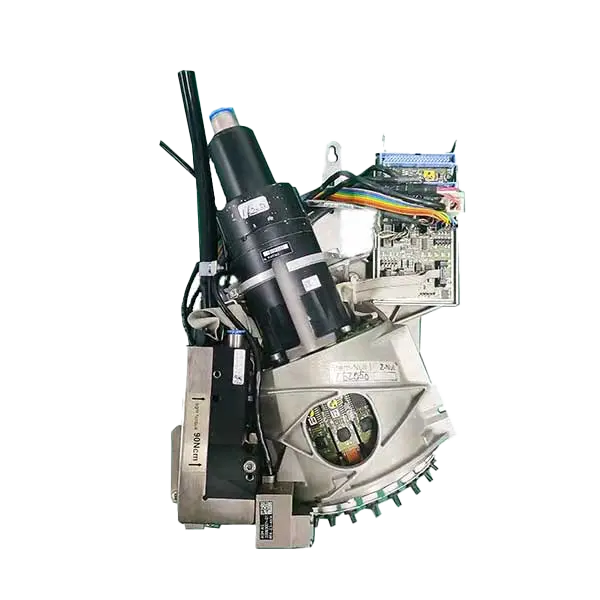
Availability may include DLM head modules, stars, sleeves, nozzles, nozzle changers, component cameras, PCB vision modules, motors, boards and cables. The exact part number is required whenever possible.
Please provide HS50 or HS60, required quantity, head and conveyor configuration, feeder requirements, component range, preferred condition, destination country and delivery schedule.
Send the required model, head configuration, component range, feeder requirement, preferred equipment condition and destination country for machine matching.