
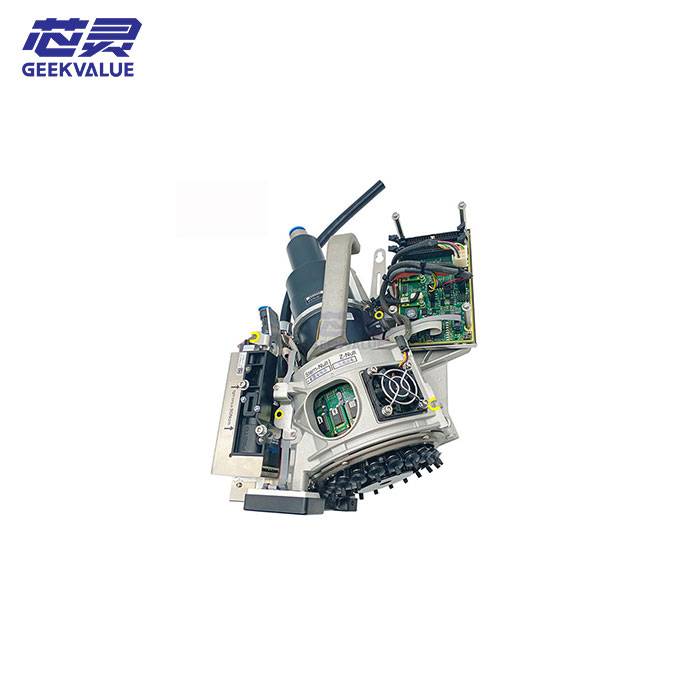
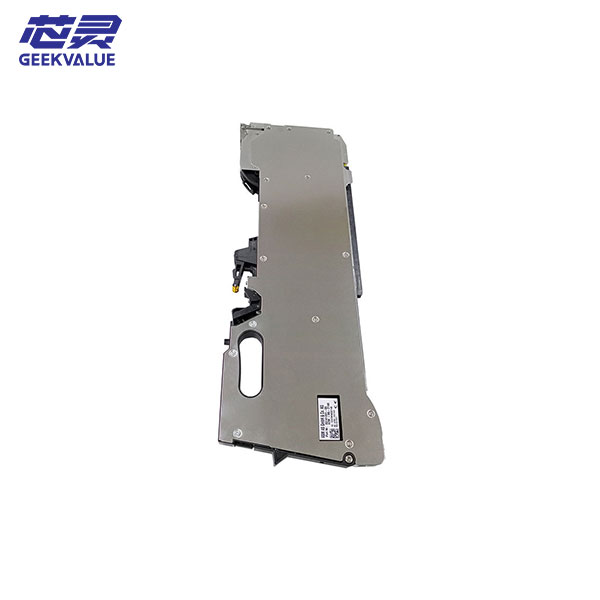
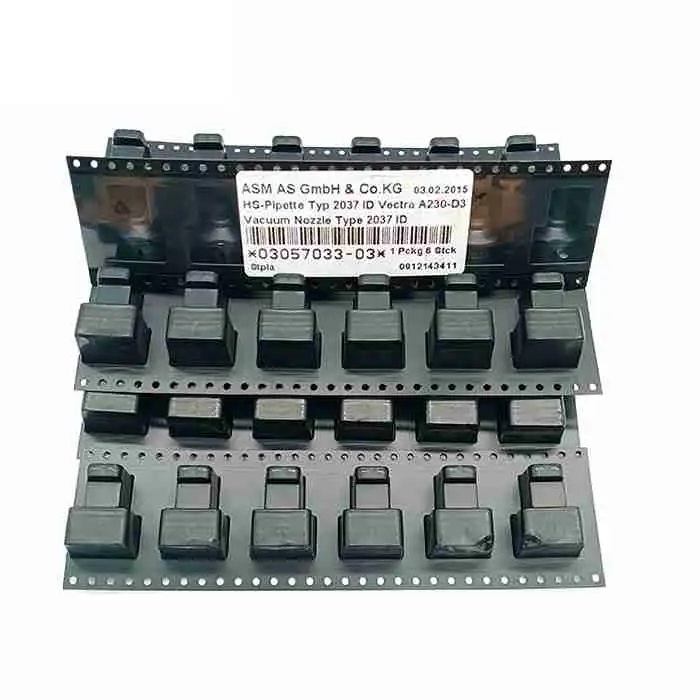
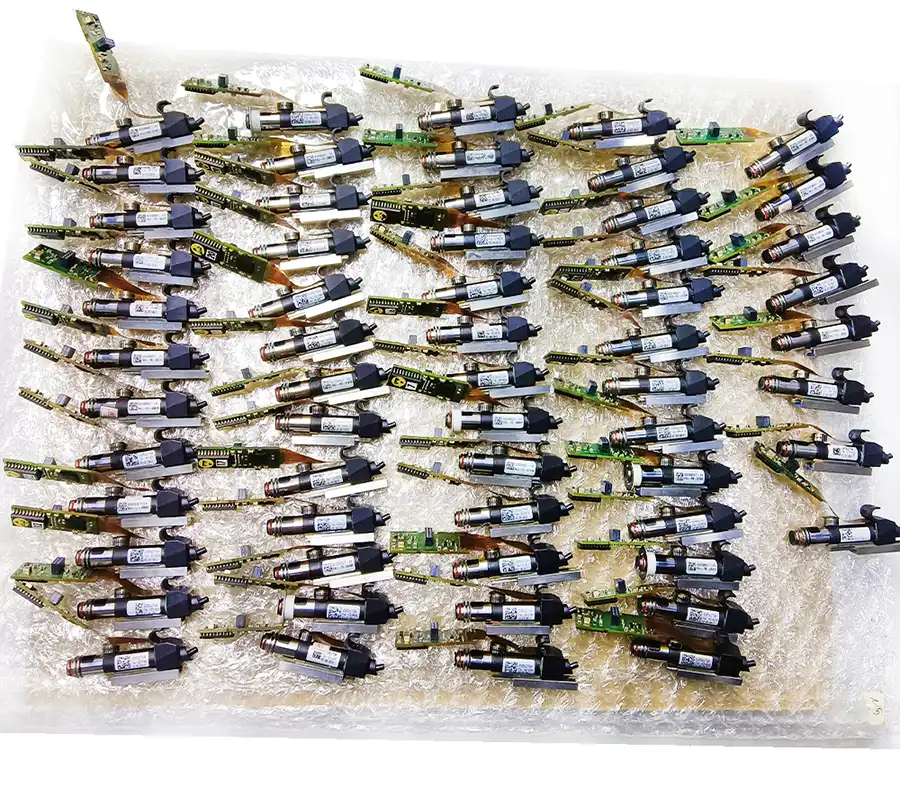










GEEKVALUE provides the 03003426 with a focus on Image Sharpness Consistency. We ensure that the internal sensor remains perfectly planar to the optical path, which is critical for maintaining a uniform focus across the entire 6x6mm FOV, especially when dealing with the shallow depth-of-field typical of micro-magnification lenses.
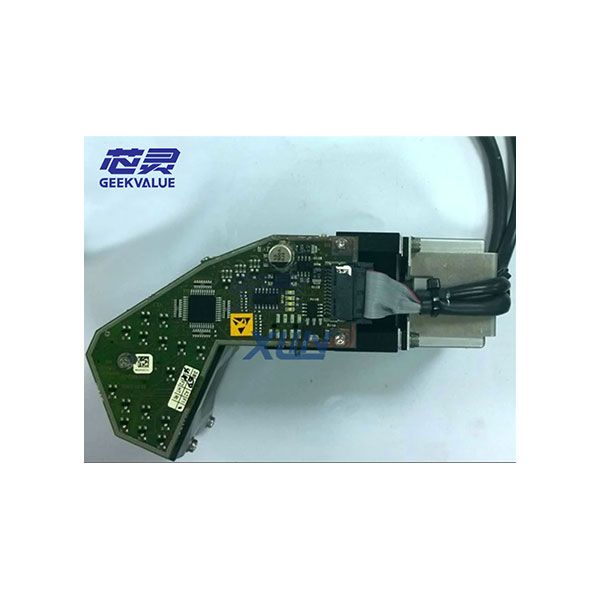
Technical Specifications
Feature | Technical Data |
Product Type | High-Density Digital BE Camera (Type 23) |
Part Number (P/N) | 03003426 |
Sensor Area | 6 x 6 mm (Ultra-Compact Array) |
Data Architecture | High-Speed Digital RK Interface |
Shutter Type | Synchronized Global Shutter |
Main Application | C+P (Collect & Place) Micro-Component Recognition |
Compatibility | SIPLACE High-Speed Placement Heads (CP Series) |
Strategic Performance Advantages
· High-Definition Micro-Geometry Recognition: The 03003426 is optimized for "Fine-Pitch Lead Recognition." Its sensor is capable of distinguishing between microscopic solder bumps on WLCSP (Wafer Level Chip Scale Packaging), providing the vision PC with high-contrast data even on reflective surfaces.
· Vibration-Hardened Internal Chassis: Given its role in the C+P head environment, the 03003426 is built with a Shock-Absorbent Internal Frame. This protects the delicate CMOS/CCD sensor from the constant mechanical fatigue of the $4.5\text{G}+$ gantry cycles, ensuring that the "Optical Center" never drifts over time.
· Optimized Signal-to-Noise Ratio (SNR): The "RK" digital circuitry includes Hardware-Level Image Filtering. This suppresses the electrical noise generated by the machine’s internal high-frequency switching power supplies, ensuring that the edges of a 0201 component are always sharp and clearly defined.
· Low-Thermal-Signature Sensor: To prevent the "Hot Pixel" phenomenon—which can cause false recognition errors during long shifts—the 03003426 utilizes a Passive Heat-Sink Alloy Housing. This maintains the sensor at its optimal operating temperature, preserving grayscale accuracy throughout 24/7 production cycles.
The GEEKVALUE Advantage: "Micro-Precision, Macro-Efficiency"
1. 360° Total Cost Optimization (TCO)
A blurry or failing micro-camera leads to "Intermittent Recognition Alarms," the #1 enemy of SMT efficiency. GEEKVALUE optimizes your TCO by providing 03003426 Cameras with Verified Field-Flatness. By ensuring every pixel is perfectly focused, we help you eliminate the "Vision Retries" that slow down your production line.
2. Trusted by 400+ Public Companies
Global leaders in high-density memory modules and advanced wearable electronics trust GEEKVALUE for their Type 23 vision components. Our 03003426 cameras are the standard choice for listed companies that require "Absolute Reliability" in their micro-component placement processes.
3. Optimized for "Type 23" Integration
GEEKVALUE’s 03003426 is factory-calibrated for the Specific Magnification Ratios of the Type 23 optical system. We ensure that the electronic "Trigger Lag" is minimized, allowing for a seamless "Plug-and-Play" replacement that maintains the sub-millisecond synchronization required for "Flight-Alignment."
Frequently Asked Questions (FAQ)
Q1: Why use a 6x6 FOV camera instead of a larger 27x27 model?
The 6x6 FOV (03003426) provides much higher magnification for micro-components. This allows the vision software to see more "pixels-per-component," which is essential for the precise alignment of 0201s and fine-pitch ICs where a larger FOV would lack the necessary detail.
Q2: What are the symptoms of a sensor "fading" in the 03003426?
Symptoms include a "grainy" image in the machine's maintenance monitor, consistent "Offset Alarms" that only happen on small components, or the machine failing to find the component's center even with perfect lighting.
Q3: Can the 03003426 be used for PCB Fiducial (Mark point) recognition?
While possible, it is not recommended. Its 6x6mm FOV is too small for most standard Fiducials. This camera is specialized for Component Alignment; PCB Mark points are typically handled by the LP (Long-Range) cameras like the Type 34.
Q4: Is any special software setup needed after replacement?
Yes. After installing a new 03003426, you should run the "Vision Station Calibration" and "Geometry Normalization." This teaches the machine the exact pixel-to-millimeter ratio for the new sensor, ensuring placement accuracy is maintained.